
St Martin to St. Barth Ferry and Boat Transfer (2026 Prices)
A St Martin to St. Barth ferry crossing, or a private boat transfer, is the sea link between Sint Maarten or St. Martin and St. Barth, and for most travelers it comes down to those two choices. You take a public ferry for the price of a nice lunch, or you book a private boat that meets you at the dock and runs door to door. Both land you in Gustavia, the only port on St. Barth, right in the middle of town. This guide lays out the routes, the 2026 fares, the luggage rules, the customs check that catches people off guard, and how the boat stacks up against flying or a helicopter.
We live and work on the island, so this is written the way we'd explain it to a guest over WhatsApp. All prices below are 2026 and indicative. Ferry fares move with the season and the operator, and the private boat numbers are per boat, not per person. Read the trade-offs, then pick the option that fits your group, your bags, and your patience for a choppy half hour at sea.
St Martin to St. Barth ferry and boat: options at a glance
There is no bridge and no causeway between St. Martin and St. Barth. You cross roughly 13 nautical miles of open water known as the St. Barth Channel, and you have four real ways to do it.
- Public ferry. Cheapest, most luggage-friendly, slowest, and the most exposed to a rough channel. Fixed schedule, up to three round trips a day per operator.
- Private boat transfer. Door to door, runs 24/7 including after the last ferry, meets you at the airport or marina. The price covers the crossing, drinks on board, and baggage assistance. Premium price, charged per boat.
- Scheduled flight. The fastest budget-friendly option at roughly 10 to 15 minutes in the air, but tight on baggage and daylight-only.
- Helicopter. Around 10 minutes, private charter only, priced on quote, the most weather-sensitive of the lot.
The two public ferry operators that matter are Great Bay Express on the Dutch side and Voyager on the French side. A smaller seasonal operator, The Edge, runs limited days from Simpson Bay. Everything arrives at Gustavia. Whatever you board, you step off in the center of the capital, a short ride from St-Jean, Lurin, or wherever you're staying.
Quick budget snapshot
To set expectations before the detail. A round-trip ferry ticket runs roughly 75 to 120 euros per person depending on operator, class, and date, which is about 80 to 130 US dollars. A private boat starts around 1,600 euros one way for a small boat near 36 feet, about 1,750 US dollars, and rises with size from there, charged for the whole boat no matter how many of you are aboard. A round trip is about twice the one-way. A scheduled flight sits in between at around 200 US dollars one way. We'll break each of these down below.
The public ferries
Two companies carry the bulk of foot traffic between the islands. They run similar boats and similar schedules, but they leave from different sides of St. Martin, so the right one for you often depends on where you land or where you're staying that morning.
Great Bay Express, the Dutch side option
Great Bay Express departs Philipsburg on the Dutch side and runs non-stop to Gustavia. This is the natural choice if you're flying into SXM, Princess Juliana airport on Sint Maarten, since Philipsburg is close to the airport. The company advertises a crossing of about 45 minutes, and it runs up to three trips a day. The first morning departure leaves Philipsburg around 7:15 am, with reduced service on Sunday, and the last ferry leaves Gustavia around 6:45 pm to arrive back in Philipsburg near 7:30 pm. Across a week that works out to roughly 19 to 20 sailings.
On fares for 2026, indicative and subject to change, Great Bay Express publishes a clean structure. A one-way adult ticket is about 75 US dollars, which is roughly 69 to 70 euros. A child aged 2 to 11 is about 50 dollars, and an infant under 2 travels free. Port and departure taxes of about 15 dollars each way are already included in that price.
Here's the part people miss. A round trip is not double the one-way. If you go out and back the same day, the day-trip fare is about 90 US dollars for an adult, roughly 83 to 85 euros, with a child around 75 dollars. A standard open round trip where you return on a different day is about 120 US dollars, roughly 110 to 112 euros, child around 75, infant free. So if you know your return, booking a return ticket beats buying two singles.
Voyager, the French side option
Voyager sails from Marigot on the French side aboard the M/V Voyager 3 Dreamliner and also arrives at Gustavia. The French-side route is the longer of the two, marketed at about 60 minutes, so plan for closer to an hour in the water than the Dutch-side 45. Voyager runs about three daily crossings from Marigot, with sample times cited around 8:50 am, 4:00 pm, and 6:55 pm. As with every schedule here, times shift seasonally, so confirm them when you book.
One important update for 2026. Voyager's primary departure is Marigot. The historic Oyster Pond departure from Capt. Oliver's Marina has been disrupted because that marina has been closed and under reconstruction since the post-Irma period. Day-to-day Oyster Pond sailings should be treated as not reliably running. If a booking page or an old guide tells you to show up at Oyster Pond, confirm it directly before you drive out there.
Voyager prices differently from Great Bay Express. It uses dynamic, class-based pricing across three tiers, ECO Flex, SMART which adds WiFi, and BUSINESS. The lowest advance ECO fare is quoted around 37 euros one way, roughly 40 to 42 dollars, and the marketed round-trip lead-in is from about 69 euros, roughly 75 to 78 dollars. Those are lead-in prices, not what most people actually pay. A third-party estimator showed real one-way fares closer to 87 dollars for ECO, 91 for SMART, and 138 for BUSINESS, with round trips around 108, 131, and 162 dollars by class. Port taxes of about 15 dollars per direction are included. If you book in advance and hold a loyalty card, Voyager advertises savings of up to 40 percent. Treat the low numbers as a starting point and check the real fare for your date.
What both ferries share
A few things hold true on either operator. Both advertise generous, free checked-luggage allowances, which we cover in detail further down. Both want you there early. Great Bay Express asks you to arrive at least 45 minutes before departure. Voyager opens check-in about an hour before, asks you at the desk at least 30 minutes prior, and wants you ready to board at least 20 minutes before the boat leaves. Show up late and you lose your booking priority. Both dock at Gustavia, where an immigration desk waits for you on arrival.
Ferry pros and cons
The case for the ferry is simple. It's the cheapest way across, it's the most forgiving on luggage, and it drops you in the center of Gustavia. The case against it is just as simple. It's the slowest option once you add docking and the immigration line, it runs on a fixed schedule with the last boat leaving in the early evening, and it's the most exposed to a channel that can be genuinely rough. If you're traveling with a lot of bags, on a budget, and you don't mind the timing, the ferry is hard to beat. If you're prone to seasickness or you're landing after dark, read on.
The private boat transfer
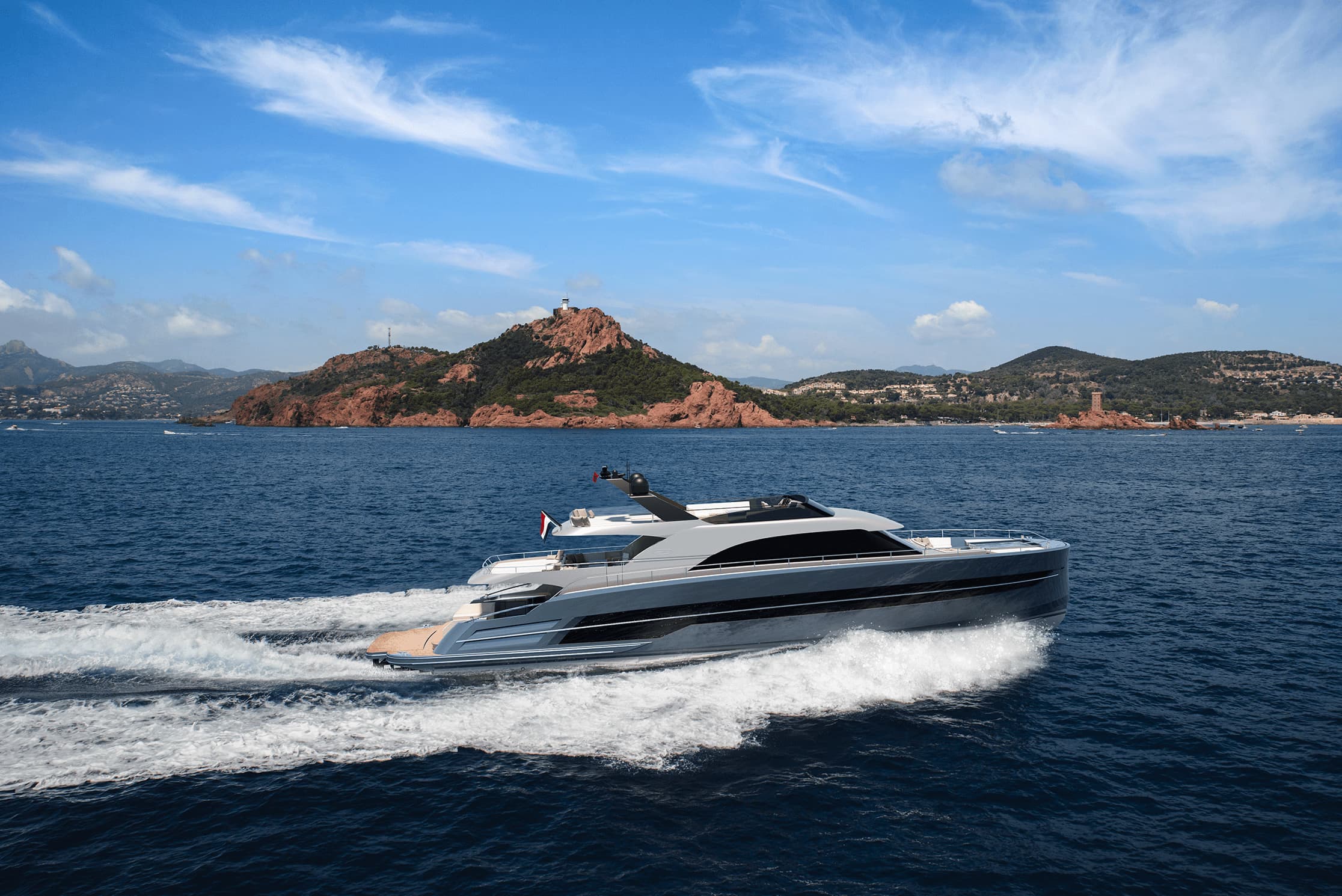
A private boat transfer flips the whole experience around. Instead of you fitting the ferry's schedule, the boat fits yours. Operators pick you up near Princess Juliana airport on the Dutch side, or at Marigot and Marina Fort Louis on the French side, walk you through immigration ahead of the line, run a high-speed crossing of about an hour to Gustavia, and help you with your bags on the other side. The crossing price covers the transfer, drinks on board, and baggage assistance. The onward car to your hotel or villa is arranged separately, which our concierge can set up.
The biggest practical advantage is the clock. Private boats run day and night, 24/7, including night transfers after the last ferry has gone and after St. Barth's airport has closed. That alone is why they exist. If your long-haul flight lands at SXM at 6 pm, you've missed the last ferry and you can't fly to SBH because the airport has no night operations. A private night boat is often the only way to sleep on St. Barth that evening.
What it costs in 2026
These are per-boat prices, indicative for 2026, not per person. A small boat near 36 feet starts from about 1,600 euros one way, roughly 1,750 US dollars, for the whole boat. The price covers the crossing itself, drinks on board, and baggage assistance, and that is all, so treat anything beyond that as a separate arrangement.
Step up in size and the price climbs. A mid-size boat in the 40 to 60 foot range costs more than the small-boat entry, and a yacht above 60 feet more again. Every boat and date is different, so the larger sizes are quoted per boat rather than from a fixed list. The structure stays the same throughout. One price for the whole boat, a round trip at about twice the one-way, and the crossing, the drinks, and baggage assistance included.
Because the price is for the boat, the cost per head improves with group size. Spread the 1,600 euro entry across six people and it works out to a few hundred euros each, more than a ferry ticket but for a private crossing on your own schedule. For a couple, the ferry is far cheaper. For a family or a group with a pile of luggage, a late arrival, or a night landing, a private boat starts to make real sense.
The Île Fourchue swim stop
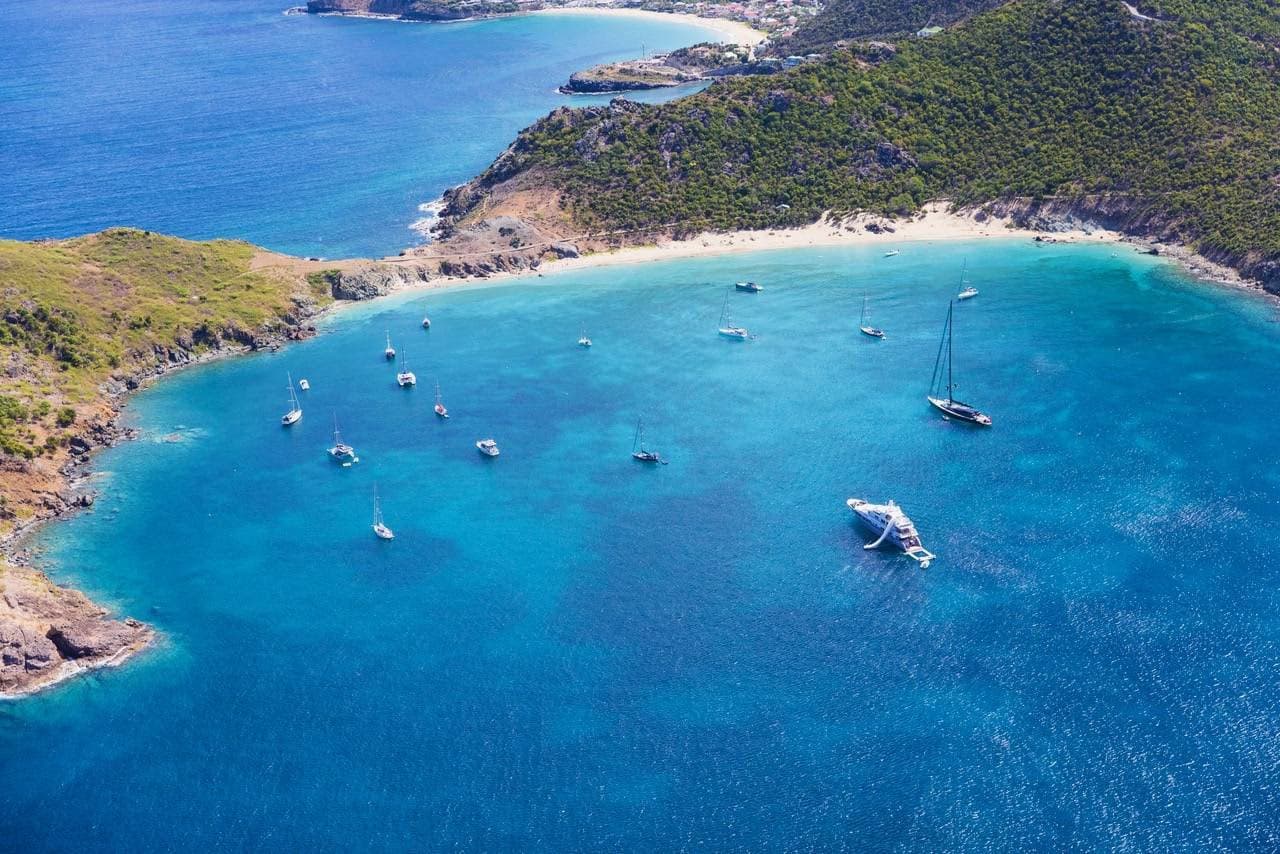
One thing a ferry will never do for you. On a private transfer you can usually add a swim or snorkel stop at Île Fourchue, the uninhabited islet sitting in the channel between the two islands. It's inside the Réserve Naturelle de Saint-Barthélemy, the marine reserve, so boats use the mooring buoys and anchoring is restricted. Adding the stop turns a plain transfer into a short excursion, which we arrange separately from the basic crossing. If you're not in a hurry, it's a fine way to break up the channel and start the trip in the water rather than in a customs line. Our team can build this into a private yacht transfer and handle the reserve rules for you.
Sea conditions and how to avoid a rough ride
Do not assume the crossing will be calm just because it's the Caribbean and the sun is out. The St. Barth Channel is frequently choppy even on clear days. It sits exposed to Atlantic swell, which is why locals and crews talk about it the way they do. One ferry guide puts it plainly, the channel between St. Martin and St. Barth is frequently choppy even on sunny days. On a bad day it can be a rough 30 to 60 minutes.
If you're prone to motion sickness, the seating advice is consistent and worth following. Sit on the lower deck, centered, and toward the rear of the boat. Avoid the upper decks, where the movement is amplified. The motion is least where the boat pivots, low and in the middle. Voyager's Dreamliner uses a foil system designed to cut wave impact, which helps on the French-side route, but no boat erases the swell entirely.
A few practical habits help. Take any motion-sickness medication before you board, not after you start to feel it. Keep your eyes on the horizon rather than on your phone. Eat something light beforehand rather than nothing at all. If the forecast looks ugly and a smooth ride matters more than the fare, this is exactly when a flight or a stabilized private boat earns its premium.
Customs and ID between St. Martin and St. Barth
This is the single most common mistake we see, so read it twice. A passport is mandatory for every passenger, even on a day trip, even when you leave from the French side. The reason is that St. Barth lies outside the Schengen Area, so there is a genuine immigration check when you arrive in Gustavia.
People assume that because both St. Martin and St. Barth are French there's no border to cross. That's wrong. The Schengen rules mean a real check applies on arrival in St. Barth regardless of which side you sailed from. EU nationals may present a national ID card or a passport. US, Canadian, and most other nationals must carry a valid passport. There are no exceptions for a same-day round trip.
There is an immigration desk right at the Gustavia ferry dock. When several morning ferries arrive together, the queue can run past 20 minutes, so getting off the boat early genuinely saves you time. If you're on a tight day-trip clock, that detail matters. A private boat sidesteps much of this, since the operator escorts you through immigration ahead of the line, which is part of what you're paying for.
Luggage
Luggage is where the ferry quietly wins. Both operators advertise generous, free checked-baggage allowances, which is a real advantage over the small planes, where limits are tight.
Great Bay Express markets no extra luggage or baggage charges. In practice you typically get one carry-on plus two checked bags free. You must be able to carry your own bags, and excess or oversize pieces may incur a fee, but for normal travel there's no per-bag charge.
Voyager ties the allowance to fare class. ECO Flex includes 2 checked bags, SMART includes 3, and BUSINESS includes 4, all free. Surfboards travel free, which is worth knowing if you're chasing waves. The standard bag maximum is about 25 kg and roughly 100 by 80 by 50 cm. Anything bulky, unusually heavy, or oddly shaped has to be cleared with the company in advance, so call ahead if you're moving something out of the ordinary.
The headline. For ordinary suitcases the ferry does not charge you extra, and fees only come into play for excess, oversize, or unusual items. If you're traveling heavy, this is a strong reason to choose the boat over a small plane, and a reason a private transfer with full luggage handling can be worth it for a big group.
Ferry vs helicopter vs flying
The boat is not your only way to St. Barth, and it helps to see the alternatives side by side before you commit.
Scheduled flight
By air, the SXM to SBH hop is a light-aircraft shuttle of about 10 to 15 minutes on Winair or St. Barth Commuter. It's fast and only moderately priced. Indicative 2026 fares run about 200 US dollars one way and 350 round trip per person on Winair, roughly 185 and 325 euros, taxes included. St. Barth Commuter advertises budget fares from about 115 dollars one way and 230 round trip. The catch is baggage, which is tight on these small planes, and daylight, since SBH operates only in daylight hours. We cover the flying experience in depth on our flights page.
Helicopter
A helicopter is roughly a 10-minute flight and the most flexible airborne option, but it's private charter only. Operators such as Corail Hélicoptères, West Indies Helicopters, and Fivestars quote on request, so there is no published per-seat fare the way a ferry ticket has one. Budget on the order of several hundred to over a thousand euros per flight, and treat any specific figure as quote-dependent. It's the quickest and most comfortable way over, and the most weather-sensitive.
The honest trade-off
Put simply. The ferry is the cheapest and most luggage-friendly, at 30 to 60 minutes, but the slowest and most exposed to a rough channel on a fixed schedule. The scheduled flight is fast at 10 to 15 minutes and reasonably priced, but tight on bags and daylight-only. The helicopter is fastest at around 10 minutes, premium-priced, and weather-sensitive. The private boat is about an hour, door to door, available 24/7 with a swim-stop option, and premium-priced. One fact ties it together. St. Barth's airport closes at dusk, so a late arrival into SXM usually defaults to the last ferry or a private night boat.
How to choose by budget, group size, and luggage
There's no single right answer. The best transfer depends on three things, what you want to spend, how many of you there are, and how much you're carrying.
- On the tightest budget, traveling light or normal, in daylight. Take the ferry. A round trip in the 75 to 120 euro range is the cheapest way across, and the luggage is free.
- A couple wanting speed over savings, arriving in daylight. Fly. Around 200 dollars one way gets you there in 15 minutes with no channel swell.
- A family or group with luggage, a late arrival, or a night landing. Consider a private boat. From around 1,600 euros one way for a small boat, charged per boat, it runs on your schedule and after the ferries and flights have stopped.
- Landing at SXM after dark, any group size. A private night boat is often your only option to reach St. Barth that evening, since the airport is closed and the ferries have stopped.
- Prone to seasickness, on a rough-forecast day. Choose a flight, a helicopter, or a stabilized private boat, and if you must take the ferry, sit low and central toward the rear.
- Moving surfboards or a lot of bags. The ferry's free allowance beats the small planes. Voyager carries surfboards free.
If you'd rather not weigh all of this yourself, that's what we do. Tell our concierge team your flight details, your group size, and your bags, and we'll book the crossing that actually fits, whether that's two ferry tickets or a yacht with a swim stop. The same goes for matching the transfer to your accommodation, which you can browse on our stays page.
Frequently asked questions
Do I need a passport for the St. Barth ferry even on a day trip?
Yes. A passport is mandatory for every passenger, even on a same-day round trip and even when you leave from the French side. St. Barth is outside the Schengen Area, so there's a real immigration check when you arrive in Gustavia. EU nationals may present a national ID card or passport, but US, Canadian, and most other travelers must carry a valid passport. There are no exceptions, so don't leave it in the hotel safe.
How long is the boat transfer from St. Martin to St. Barth?
It depends on which side you leave from. The Dutch-side route from Philipsburg on Great Bay Express is advertised at about 45 minutes. The French-side route from Marigot on Voyager is closer to 60 minutes since it's the longer crossing. Once you add docking and the immigration line at Gustavia, the real door-to-door time is longer than the in-water figure. A private boat runs the high-speed crossing in about an hour and skips much of the queue.
How much does a St Barts boat transfer cost in 2026?
For a public ferry, expect roughly 75 to 120 euros per person for a round trip, about 80 to 130 US dollars, depending on operator, class, and date. Great Bay Express is about 75 dollars one way and 90 for a same-day round trip. Voyager uses dynamic pricing from a lead-in of about 37 euros one way. A private boat starts around 1,600 euros one way for a small boat near 36 feet and rises with size for a 40 to 60 foot boat or a yacht above 60 feet, charged per boat rather than per person. A round trip is about twice the one-way. All figures are 2026 and indicative.
Is the crossing rough, and how do I avoid getting seasick?
It can be rough. The St. Barth Channel is frequently choppy even on sunny days because it's exposed to Atlantic swell. If you're prone to motion sickness, sit on the lower deck, centered, and toward the rear, and avoid the upper decks. Take any medication before boarding rather than after, keep your eyes on the horizon, and eat something light beforehand. On a bad-forecast day, a flight or a stabilized private boat is the smoother choice.
Does the ferry charge extra for luggage?
Generally no, not for normal bags. Great Bay Express advertises no extra baggage charges and typically includes one carry-on plus two checked bags free. Voyager includes 2 to 4 free checked bags depending on fare class, and carries surfboards free. Fees only apply to excess, oversize, or unusual and bulky items, which must be cleared with the operator in advance. You also need to be able to carry your own bags. For heavy travel, the ferry beats the small planes on baggage.
Can I take a boat to St. Barth at night after the last ferry?
Yes, but only a private one. Public ferries stop in the early evening, with the last boat leaving Gustavia around 6:45 pm, and St. Barth's airport has no night operations and closes at dusk. Private boat transfers run 24/7, including night crossings after the last ferry, with airport meet-and-greet and immigration handled for you. If your flight lands late at SXM, a private night boat is usually the only way to reach the island that evening.
Does Voyager still leave from Oyster Pond?
Not reliably. For 2026 Voyager's primary departure is Marigot on the French side. The historic Oyster Pond departure from Capt. Oliver's Marina has been disrupted because the marina has been closed and under reconstruction since the post-Irma period. Don't assume an Oyster Pond sailing. If an old guide or booking page sends you there, confirm directly with the operator before driving out.
Should I take the ferry or fly to St. Barth?
It comes down to speed, budget, and luggage. The ferry is the cheapest and most luggage-friendly at 30 to 60 minutes, but the slowest and most exposed to the channel. A scheduled flight is fast at 10 to 15 minutes and reasonably priced at around 200 dollars one way, but tight on bags and daylight-only. If you're carrying a lot or watching the budget, take the boat. If you want speed in daylight and travel light, fly. After dark, a private boat is often the only option.
Plan your St. Barth boat transfer with GO SBH
Getting to St. Barth shouldn't eat the first day of your trip. We're on the island, we book the local crews, and we match the crossing to your flight, your group, and your bags, whether that's two seats on the morning ferry or a private boat with a swim stop at Île Fourchue. For a private crossing or a day on the water, start with our yacht service, and for everything around the transfer, from villa to airport pickup, talk to our concierge. Send us your dates on WhatsApp and you'll have a quote back in under an hour. For more island field notes, browse The Journal.