
A St. Barth Yacht Charter Day: Colombier and Île Fourchue
A St. Barth yacht charter day pairs two anchorages, Colombier and Île Fourchue, with a crossing to or from St. Martin. The order you run them in shapes the whole day.
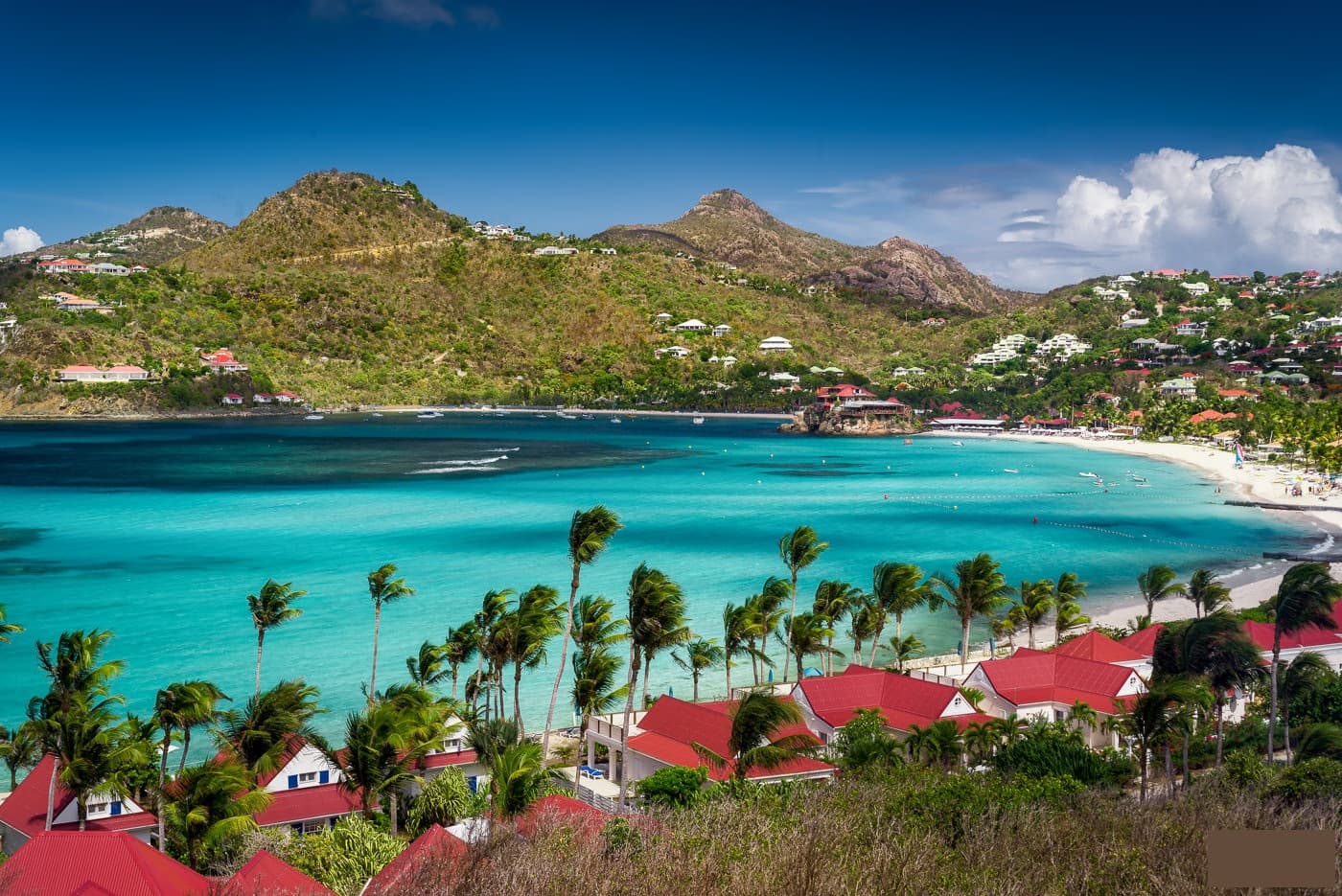
Most visitors picture the boat as the destination. On St. Barth it works the other way around. The yacht is the road. The island has no big resort coastline you can walk for a mile, no chain of beach clubs strung along a single bay. What it has instead is a scatter of small coves, a marine reserve, and an uninhabited islet sitting in the channel toward St. Martin. The only sensible way to string those together in a day is from the water. A yacht charter in St. Barth is less a luxury add-on than the practical answer to a question the geography keeps asking.
This is a field guide to how a classic day on the water actually runs. The hour-by-hour shape of it, how to choose between a catamaran and a motor yacht, what makes Colombier beach and Île Fourchue worth the anchor time, the marine-reserve rules that keep both places intact, and how the St. Martin crossing folds in either as a transfer or as a swim stop. We arrange these days year-round, so most of what follows is written from the dock rather than the brochure.
What a classic St. Barth yacht charter day looks like, hour by hour
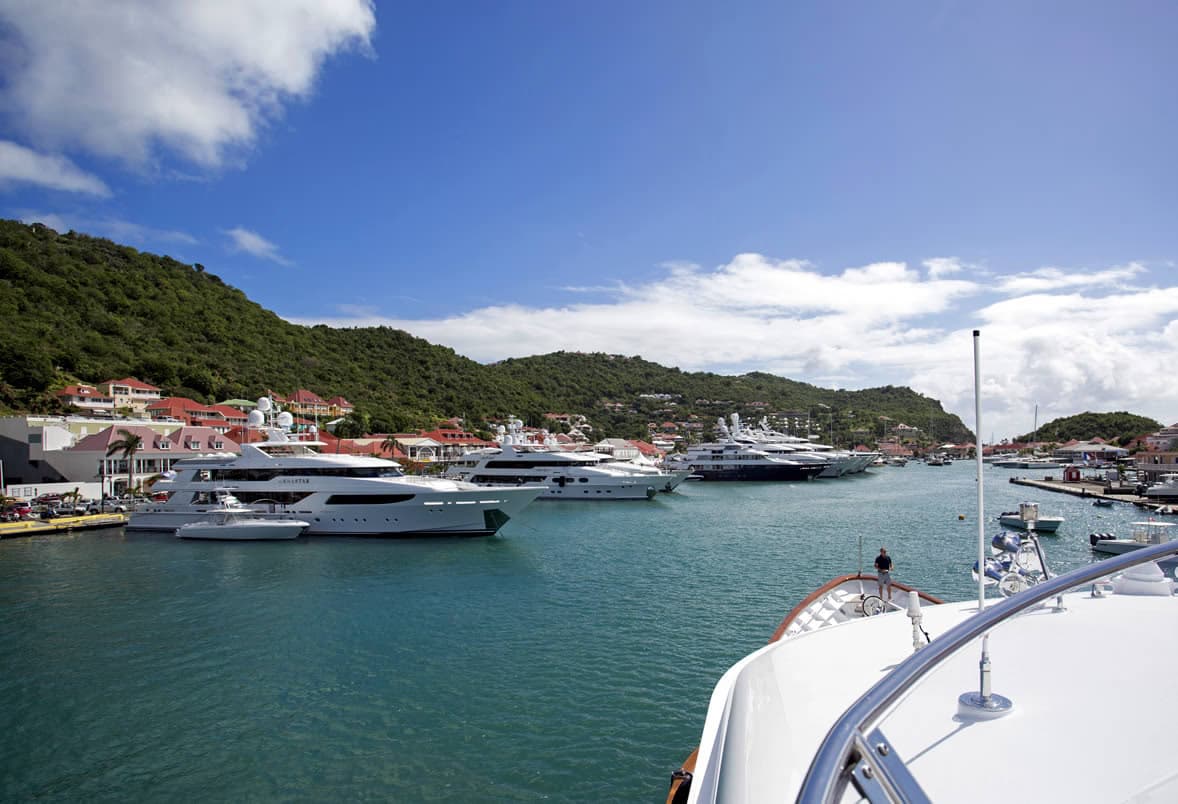
A full day usually begins in Gustavia, where the charters and transfers run from. You board late morning, call it 9:30 to 10:30, because the wind tends to build through the afternoon and the calmest water is early. The crew has already provisioned, fueled, and checked the mooring situation for the day, so boarding is mostly a matter of stowing bags and getting a briefing on where you're headed.
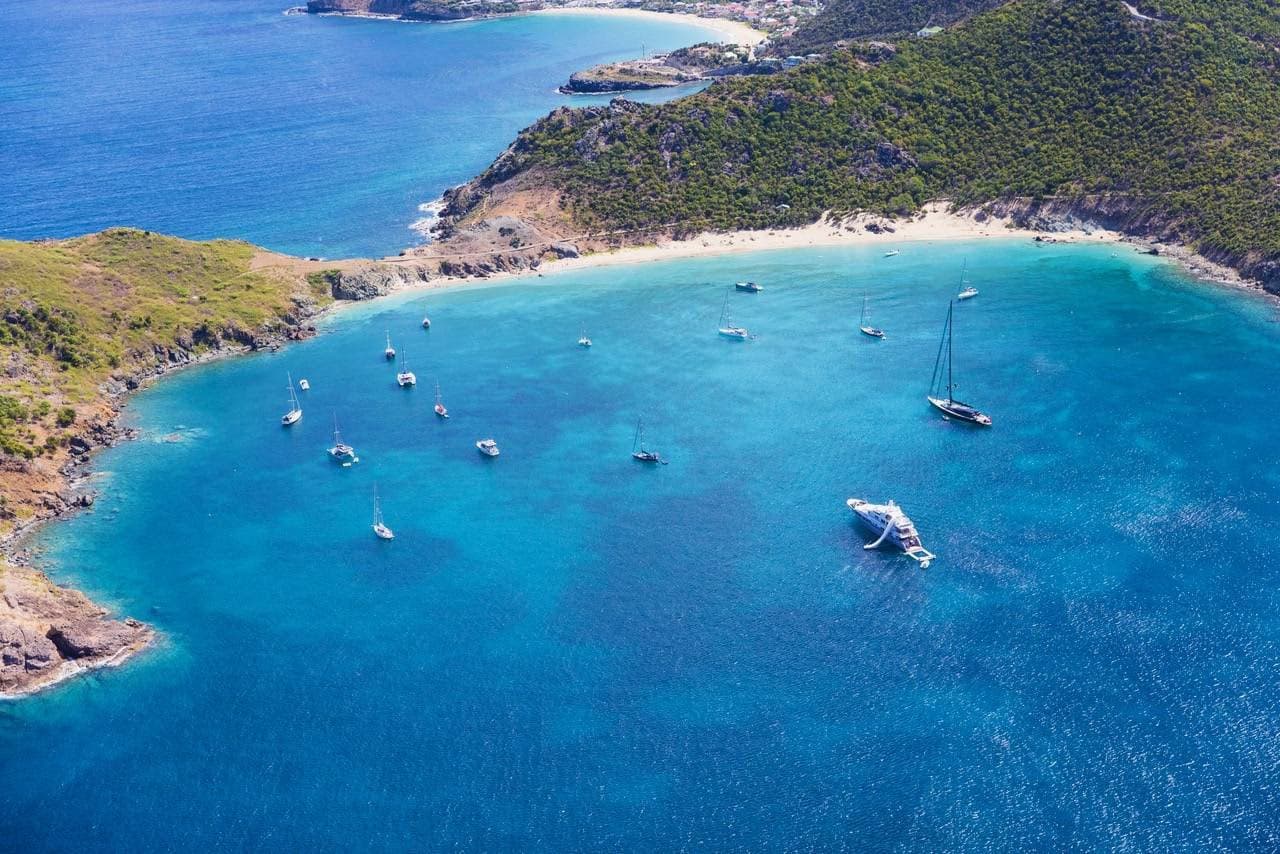
The first leg is short. Out of Gustavia harbor, around the northwest end of the island, and into Anse de Colombier inside twenty to thirty minutes on most boats. This is the swimming and snorkeling anchorage, and it rewards an early arrival before the day's traffic settles in. Two to three hours here is normal. In and out of the water, a long surface swim along the rocks, lunch aboard while the boat lies to its mooring.
From Colombier, the crossing toward St. Martin puts Île Fourchue roughly on the way. Boats often make it the midday or early-afternoon stop, a second snorkel in clearer, more exposed water, and for anyone restless, a steep scramble up the ridge. By late afternoon you're either turning back toward Gustavia for a sunset run along the coast, or continuing across to St. Martin if the day is doubling as a transfer. The rhythm is deliberately unhurried. A good crew would rather give you a long stop at one place than three rushed ones.
Catamaran or motor yacht: how to choose
The first real decision is hull type, and it comes down to how you want to spend the day rather than which is objectively better.
The case for a catamaran
A catamaran sits flat. The two hulls give you a stable platform, a lot of shaded deck, and a shallow draft that lets the boat tuck closer in to a beach than a deep-keeled monohull can. For groups and families that translates into an easy day. Kids who aren't fighting the heel of the boat, somewhere shaded to retreat to between swims, and a wide trampoline foredeck that becomes the social center of the day. A catamaran in Saint-Barthélemy waters is the default choice for anyone whose priority is comfort at anchor over speed between stops.
The case for a motor yacht
A motor yacht trades some of that lounging space for pace and range. It covers the ground between Colombier, Île Fourchue, and St. Martin faster, which means you can add stops like Shell Beach, Grand Cul-de-Sac, or an onward leg toward Anguilla without the day feeling like one long passage. If your group wants to see more of the region in a single outing, or if you're using the boat partly as a fast transfer, a motor yacht in these Caribbean waters earns its keep. The tradeoff is a narrower, more enclosed deck and a livelier ride in a chop.
For a day built around two or three anchorages and a lot of swimming, most families land on a catamaran. For a day built around distance, a motor yacht. Tell a concierge how you actually want to spend the hours and the right hull usually picks itself.
Colombier in depth: the protected anchorage
Anse de Colombier is the anchorage everyone means when they talk about the quiet side of St. Barth. It sits at the island's northwest tip, and its defining feature is what it lacks. There is no road to it. You reach Colombier beach only by boat, or on foot via a coastal trail that runs roughly twenty to thirty minutes from the Petite Anse / Flamands side. That single fact governs the character of the place. No road means no parking, no vendors, no beach bar, and no facilities of any kind on the sand. What you bring is what you have.
For a boat, that inaccessibility is the appeal. The bay is protected and tends to stay calm when other anchorages are working, which makes it a reliable first stop and a comfortable place to lie for a couple of hours. The water is clear and shallow over sand, easy for swimmers of any confidence, and the rocky edges hold enough life to make snorkeling worthwhile rather than obligatory.
Turtles and snorkeling
Sea turtles are common at Colombier. They graze the seagrass and surface to breathe, and on a calm morning you can drift over one without it minding much, provided you keep your distance and don't crowd it. The snorkeling is best along the margins of the bay where the sand gives way to rock. Bring your own gear or use the boat's, and plan to spend real time in the water. This is the stop where the day slows all the way down. Because there's nothing on the beach, most people stay close to the boat and treat the swim itself as the point.
Île Fourchue in depth: the reserve islet
Île Fourchue, also written Île Fourche, is the uninhabited islet sitting in the channel between St. Barth and St. Martin. It belongs to the Réserve Naturelle de Saint-Barthélemy, the island's marine reserve, and that status defines everything about how you visit. It is wild, treeless in places, and has no facilities, no residents, and no services. People come for two things, the water and the climb.
Mooring, not anchoring
Inside the reserve you pick up a mooring buoy rather than dropping an anchor. The buoys exist to protect the seagrass and coral on the bottom, which an anchor and chain would tear up over time, and anchoring is restricted for exactly that reason. A crew that works these waters knows the buoy field and how to take one cleanly. This is one of the clearest places where having a local skipper matters. They know which buoys are sound, how the islet's wind shadow behaves, and when the swell makes the stop worth skipping.
The snorkeling and the hike
The snorkeling at Île Fourchue is good and feels more exposed and oceanic than Colombier. Clearer, a little wilder, with more relief on the bottom. For those who want to move, there's a steep hike from the anchorage up to the ridge, rough underfoot and worth the effort for the view back across the channel toward both islands. Wear something on your feet for it. This is not a barefoot walk. Because Île Fourchue sits on the line between the two islands, it's often the first or last stop on a St. Martin crossing rather than a destination in its own right, which is exactly why it pairs so naturally with the transfer.
The marine reserve: how to be a good guest
Both Île Fourchue and parts of Colombier fall under the Réserve Naturelle de Saint-Barthélemy, and the rules are simple enough to remember and worth taking seriously. The reserve protects coral, seagrass, and turtles, and the whole system only works if visiting boats treat it as a shared trust rather than a backdrop.
- Pick up a mooring buoy rather than anchor in protected zones. Anchoring damages the seafloor the reserve exists to protect.
- Respect the no-fishing and no-take areas. Inside reserve zones, fishing is off-limits.
- Give wildlife room. Turtles in particular should be watched, not chased or touched. Keep your distance and let them surface and feed on their own terms.
- Use reef-safe sunscreen. The chemicals in conventional formulas are hard on coral, and reef-safe is the easy fix.
- Take everything out with you. There are no bins because there are no facilities, so what comes aboard leaves aboard.
None of this is onerous, and a professional crew handles most of it without you thinking about it. They'll be on a buoy before you've found your mask. But the spirit matters as much as the letter. The reason Colombier still has turtles and Île Fourchue still has coral is that most people who come here behave as guests. The day is better for it, and so is the next person's.
The St. Martin crossing: ferry versus private transfer
A lot of St. Barth yacht days are also arrival or departure days, because the practical way onto the island for many travelers runs through St. Martin. Worth getting the geography straight first, since the names trip people up. SXM, Princess Juliana, is the big airport, and it sits on Sint Maarten, the Dutch side. St. Martin is the French side. SBH, the small airport on St. Barth, is Gustaf III / Rémy de Haenen, and not every flight or traveler wants to thread it. So the channel between the two islands gets crossed constantly.
Public ferries
Public ferries run the route from the St. Martin / Sint Maarten side. Voyager runs from Marigot on the French side and from Oyster Pond, while Great Bay Express runs from Philipsburg on the Dutch side. The crossing runs roughly forty-five minutes, a little longer from Marigot. It works, it's economical, and on a calm day it's a non-event. The channel can be choppy, though, and on a rough afternoon the public boat is a wet, lurching way to start or end a trip. You're also on a fixed schedule, with your luggage, and with everyone else's.
The private boat transfer
A private boat transfer between St. Martin and St. Barth changes the proposition. It's faster, it runs on your timing rather than a timetable, and the part people underrate is that it can fold a swim stop into the passage. Instead of a grim shuttle across a choppy channel, the crossing becomes the first chapter of the holiday. Pick you up near SXM, drop a mooring at Île Fourchue for a snorkel on the way through, and deliver you into Gustavia harbor relaxed rather than rattled. Run the other direction, it's a civilized way to make a late-afternoon flight without the schedule anxiety. A private boat transfer from St. Martin to St. Barth is, for a lot of our guests, the single best decision of the trip. It turns dead transit time into the day they remember. Our St. Martin boat transfer service handles the timing around your flights and can build in the Île Fourchue stop.
Sunset cruises from Gustavia
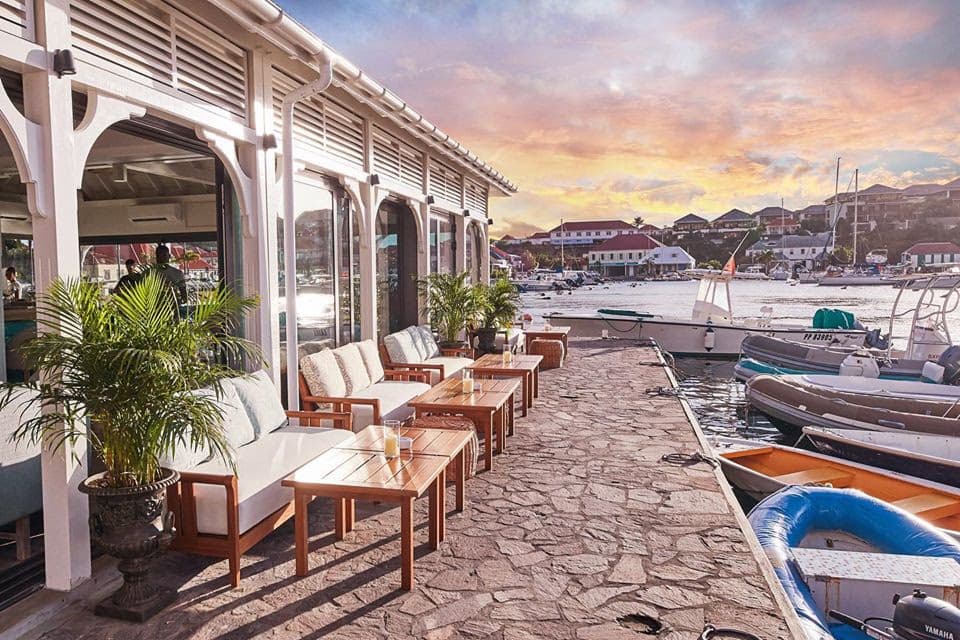
Not every outing needs to be a full day. A sunset cruise out of Gustavia is the short-format option, and it suits the evenings on St. Barth particularly well. You board in the late afternoon, run out along the coast as the light goes long and gold, and come back into the harbor after dark. It's a couple of hours rather than eight, which makes it easy to slot into a day that already has lunch and dinner plans of its own.
The appeal is partly the light and partly the change of vantage. Gustavia from the water at dusk, the masts, the hillside lights coming on, is a different town than the one you walk through. A sunset run also works as a gentle introduction to being on the water for anyone in the group who's unsure about a full day, or as a quieter evening for a group that's had enough sun by mid-afternoon. Drinks aboard, an easy pace, no agenda beyond watching the day end. For a celebration like an anniversary or a last night before flights home, it's hard to improve on. A sunset cruise from Gustavia can be set up to match the occasion, so tell a concierge what you're marking.
What to bring and how the day is provisioned
Part of what you're paying for on a private charter is not having to think about logistics, and a good operation provisions the day so that almost everything is handled before you board. Still, a few things are yours to bring, and knowing how the rest comes together helps you set the day up well.
What to pack
- Reef-safe sunscreen, and more of it than you think. The reserve will thank you and so will your skin.
- A hat, sunglasses, and a light layer for the wind on a fast crossing.
- Shoes you can hike in if you intend to climb the ridge at Île Fourchue.
- A dry bag for phones and anything that can't get wet on a choppy passage.
- Any specific medication, since there are no facilities at the anchorages.
What the boat provides
Catering is arranged ahead. Depending on the charter, that ranges from a stocked cooler of drinks and a light spread to a full crewed lunch served at anchor, and most operators will tailor it to your group's preferences if you flag them in advance. Dietary needs, a particular rosé, a cake for a birthday. Drinks, water, and ice come aboard before you do. Snorkel gear is standard, and many boats carry water toys like paddleboards, a floating mat, sometimes more, that turn a long anchor stop into a playground for kids. The cleaner you are about what you want when you book, the less you'll have to think about once you're aboard. This is the part a concierge quietly takes off your plate.
Families and groups on the water
A yacht day scales well, which is why it works so often as the one outing a whole group does together. For families, the catamaran's stable deck and shallow-draft access to calm bays like Colombier make for a low-stress day. Small children who can swim straight off the steps into shallow sand-bottomed water, shade to retreat into, and water toys to keep the restless ones occupied. Turtles, predictably, are a hit.
For larger groups, a milestone birthday, a wedding party, friends traveling together, the boat becomes the venue. Everyone is in one place, the catering is handled, and the day has a natural arc from morning swim to afternoon crossing to evening return. A crew that runs these days routinely knows how to read a group, when to push on to the next stop and when to let people settle. The practical advice is to be honest about your group when you book. A mix of strong swimmers and nervous ones, a grandparent who'd rather stay dry, a toddler, all of it shapes which boat, which anchorages, and what pace make sense. The more a concierge knows, the better the match. For multi-day groups, the boat day often anchors a wider itinerary that the same concierge team can arrange around it.
Best season and sea conditions
St. Barth's high season runs through the dry winter months, and that's when the most boats are out and the most days book up. It's also when you should reserve well ahead. Popular crews and the right boats go early in season, and a last-minute request in the busiest weeks may simply find nothing left. Book ahead is not a sales line here. It's the difference between getting the day you want and not getting one at all.
On the water itself, the variable that matters most day to day is the channel between St. Barth and St. Martin. It can be choppy, and the crossing, whether by ferry or private boat, is livelier than the protected anchorages on either end. Mornings tend to be calmest, which is one reason boats start early and tackle the open crossing before the afternoon wind fills in. Colombier stays comfortable in conditions that would make a more exposed bay unpleasant, which is part of why it's such a dependable first stop. The honest version is that the sea sets the agenda, and a good skipper will adjust the order of the day, or recommend skipping a stop, to keep you in comfortable water. Trust that judgment. It's the local knowledge you're chartering as much as the boat.
Frequently asked questions
How do I get from St. Martin to St Barts?
You have two main options. Public ferries run from the St. Martin / Sint Maarten side. Voyager goes from Marigot and Oyster Pond, and Great Bay Express goes from Philipsburg on the Dutch side. The crossing runs roughly forty-five minutes and can be choppy in the channel. A private boat transfer is faster, runs on your timing, and can fold in a swim stop at Île Fourchue on the way to Gustavia. We arrange the private option as part of a charter day or as a standalone transfer.
Can I drive to Colombier beach?
No. Anse de Colombier has no road access. You reach it only by boat, or on foot via a coastal trail that runs about twenty to thirty minutes from the Petite Anse / Flamands side. There are no facilities on the beach, so whatever you need you bring with you. That's exactly why arriving by boat is the comfortable way to spend a day there.
Why do boats use mooring buoys at Île Fourchue instead of anchoring?
Île Fourchue is part of the Réserve Naturelle de Saint-Barthélemy, and the seafloor there holds seagrass and coral that an anchor would damage. Inside the reserve you pick up a mooring buoy rather than anchor, and fishing is not permitted in the protected zones. A crew that works these waters knows the buoy field and takes a mooring cleanly.
Should I choose a catamaran or a motor yacht?
It depends on how you want to spend the day. A catamaran is stable, shaded, and shallow-drafted, better for groups, families, and long stops at anchor. A motor yacht is faster with more range, so it covers more stops and works well if you want to add Shell Beach, Grand Cul-de-Sac, or an onward leg toward St. Martin or Anguilla. Tell us your priorities and we'll match the hull.
Are sea turtles really common at Colombier?
Yes. Colombier is one of the more reliable places to see turtles, which graze the seagrass in the bay and surface to breathe. The reserve protects them, so the rule is simple. Watch, don't chase or touch, and give them room. On a calm morning you can often drift over one without disturbing it.
When is the best time to book a yacht day, and how far ahead?
The dry winter high season has the best conditions and the most demand, so the right boats and crews book up early. Reserve well ahead, especially for the busiest weeks. Mornings are generally calmest, which is why most days start early to cross the channel before the afternoon wind builds. A concierge can hold a date and the right boat once you have your travel locked.
What should I bring on a charter day?
Reef-safe sunscreen above all, plus a hat, sunglasses, a light layer for the wind, a dry bag, and shoes if you plan to hike the ridge at Île Fourchue. Drinks, water, ice, snorkel gear, and catering are arranged ahead by the boat, and many carry water toys. Flag dietary needs or a celebration when you book and the crew will set the day up around it.
Plan your day on the water
Tell us how you want to spend the day. Two quiet anchorages and a lot of swimming, a fast run that takes in more of the region, a sunset cruise from Gustavia, or a private transfer across from St. Martin that turns dead transit into the best hours of the trip. Our yacht charter and transfer team will match the boat, crew, catering, and Gustavia logistics to your group, and our concierge handles the rest around it, from your villa or hotel to dinner ashore. The staff arranging your day live and work on the island, reply on WhatsApp, and return a quote in under an hour.